A working guide to managed-plantation investing in India: how the category works,
what a coffee acre in the Western Ghats actually returns, who it's for, and how to
think about ownership over a decade rather than a quarter.
The Category
What is managed farmland investment?
A new asset class sits between agriculture and real estate — and the people who
buy into it are buying something the public markets can't sell.
For decades, Indian investors with capital to deploy chose between three options:
equity, debt, or urban real estate. Each had a clean playbook. None of them gave you
ownership of land that actually produces.
Managed farmland is the modern answer to that gap. You buy a fully
titled, freehold parcel of agricultural land — typically one or two acres — that is
professionally cultivated by a specialist operator. Income from the produce flows
back to you. Land appreciation accrues to you. You hold the document.
What sets the category apart is the management layer. You don't run the farm. You
don't drive to the village every other weekend. You don't negotiate with labour or
hedge commodity prices. The operator does that, in return for a share of the yield.
The arrangement is what makes "farmland for the urban professional" finally workable.
In India, the early cohort of managed-plantation buyers tend to share a profile:
they're in their 30s or 40s, often Bengaluru-based, with a stable income from
technology, consulting, or business. They aren't buying for cash flow next quarter.
They're buying for two reasons that public markets struggle to deliver — direct
exposure to land scarcity, and a real asset their children can inherit.
Treated correctly, managed farmland isn't a substitute for equity. It's a
complement: long-duration, tangible, and historically uncorrelated with listed markets.
The Model
How Amyra Farms' managed plantation model works
Buy the acre. Hold the title. Let the operator handle the rest. Here's what that
actually looks like, end to end.
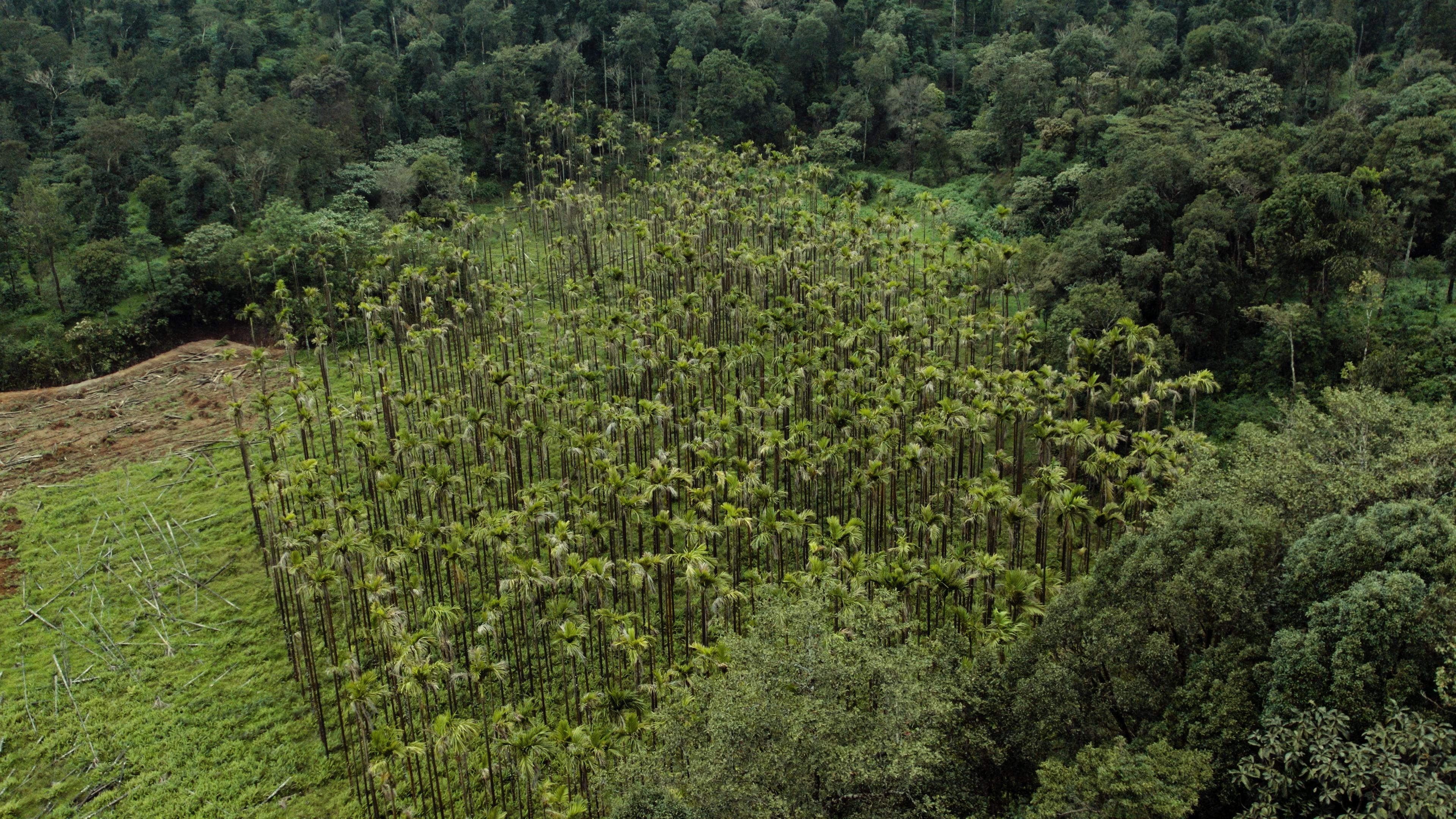
Shade-grown coffee under the silver-oak canopy at Hillsong Estate.
The mechanics are deliberately simple. You select a cohort — currently Full-Acre
Coffee or Half-Acre Coffee at our Hillsong Estate — and complete the purchase as a
standard registered land transaction. The sale deed names you (or your entity) as
the owner. The title is freehold and recorded with the sub-registrar's office.
Nothing about that is unusual; it is how Indian agricultural-land transfers have
worked for decades.
What follows the purchase is the part that's different.
Amyra Farms enters into a long-tenor management agreement covering cultivation,
agronomy, harvest, post-harvest processing, and sale. Your acre is mapped,
demarcated, and planted to a consistent agronomic standard across the estate. We
employ a permanent on-site team — supervisors, agronomists, machine operators, and
seasonal labour — and use the same data systems and inputs across every owner acre.
You receive quarterly statements during the production cycle, and an annual
settlement once the harvest is sold. The settlement is transparent: gross sale
proceeds, costs, operator share, owner share. You can request the underlying
production data for your specific acre.
Ownership benefits beyond cash flow include personal visits (advance-booked,
hosted), an annual delivery of estate coffee to your home, and access to estate
events. The point is to make the relationship between you and your acre feel real,
not abstract.
Exit options are explicit and written in. You may sell to a third party, transfer
to a family member, or — if you prefer a managed exit — initiate a buy-back process
with Amyra Farms at prevailing valuation.
The Numbers
The economics of a coffee plantation acre in the Western Ghats
A well-run coffee acre in Sakleshpur produces a yield that, when held over a decade,
has historically delivered both income and appreciation. Here's how the arithmetic
actually compounds.
Cherries at peak ripeness — the November–February pick window in the Ghats.
Coffee is a long-arc crop. The plant takes three to four years from planting to
first commercial yield, then stabilises into a productive lifetime of 25–30 years.
That long arc is exactly why managed plantation makes more sense than do-it-yourself
farming: the early years are agronomy-heavy and require expertise that few first-time
owners possess.
A single acre of well-tended Arabica or Robusta coffee in the Western Ghats, at
stabilised yield, can produce 600–900 kg of dry parchment in a normal year.
Translating that to rupees depends on grade, processing, and market conditions, but
at long-run average pricing the gross output per acre sits in the
₹70,000–₹1.2 lakh range. After agronomy costs (labour, inputs, pulping, drying) and
the operator share, the owner is left with a net cash return that, against current
per-acre investment levels, sits comfortably in mid-single-digit yields once
stabilised.
600–900 kg
Annual parchment yield per stabilised acre
8–11%
15-yr historical land CAGR · Sakleshpur belt
25–30 yrs
Productive lifetime of a coffee planting
That alone wouldn't be exciting if it were the whole story. The bigger lever is
land appreciation. Sakleshpur and Chikmagalur plantation land has compounded at
roughly 8–11% per annum over the last fifteen years, driven by scarcity (no new
gazetted plantation land is being created), proximity to Bengaluru, and a steady
appetite for boutique-luxury hospitality projects in the region.
A buyer who holds for ten years, in a representative scenario, is looking at net
rental income across the decade plus a land value at the end that is roughly twice
the entry price. That's the headline. Actual outcomes will vary; we publish detailed
projections on request.
The Terroir
Why Sakleshpur and Chikmagalur are India's premium coffee belts
Coffee grows in many parts of India. It thrives in only a handful of microclimates.
The Sakleshpur–Chikmagalur belt is where the country's serious estates have always
been.
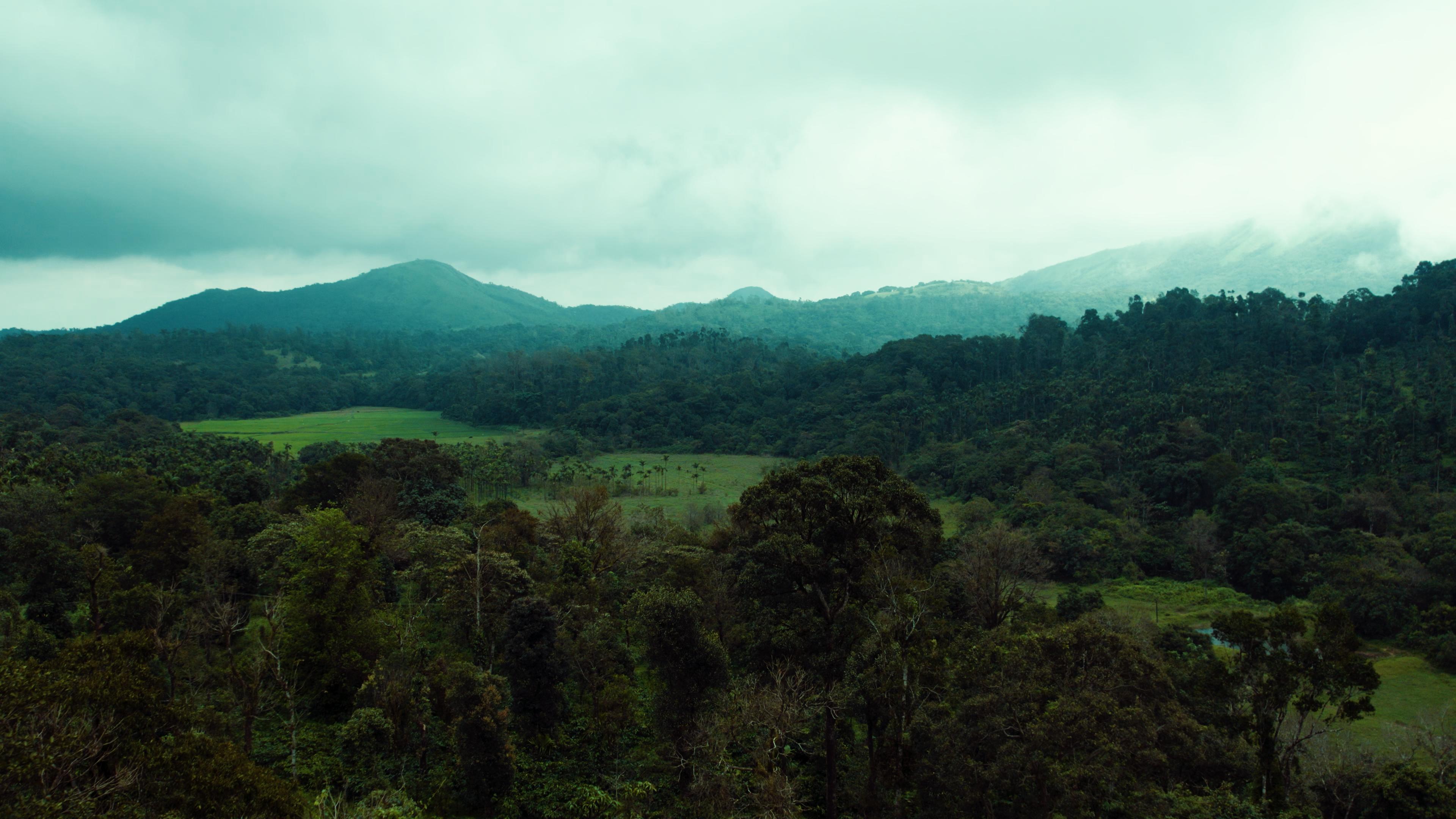
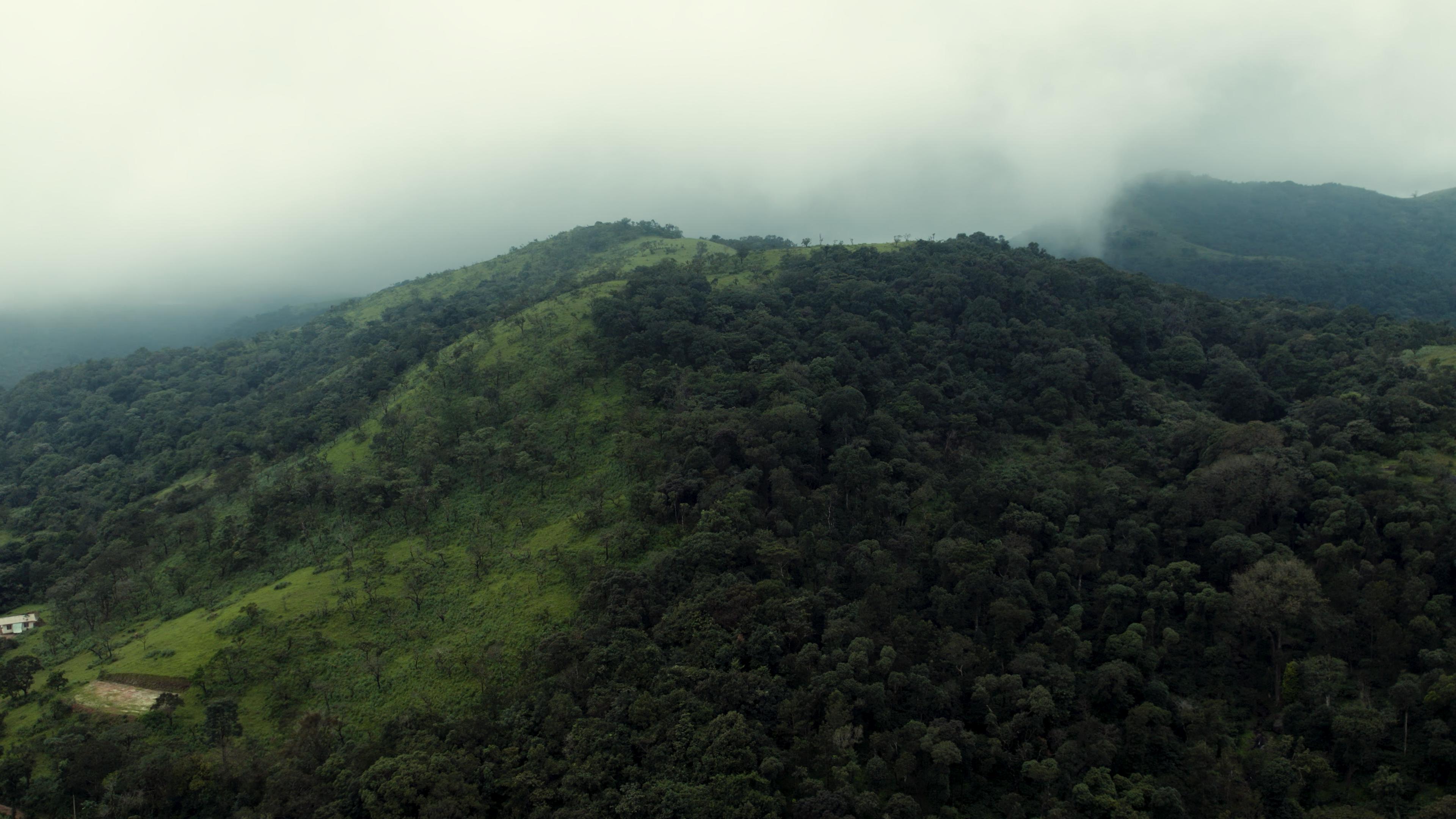
Western Ghats monsoon mist over the estate — the climate that makes the coffee.
The Western Ghats are one of the world's eight biodiversity hotspots. Within them,
the Sakleshpur–Mudigere–Chikmagalur corridor sits at the right elevation, gets the
right kind of monsoon, and holds the right soil chemistry for premium coffee. The
Indian Robusta and washed Arabica that come out of this region are recognised in
specialty markets globally.
The numbers matter, but the geography is the moat. Coffee in India needs cool nights,
warm days, and slow-draining lateritic soils with a stable pH. It also needs shade —
the best Indian coffee is grown under a canopy of silver oak, rosewood, and
indigenous species, not in monoculture under direct sun. Sakleshpur's altitude
(roughly 850–1,200 metres above sea level), its 3,000-mm-plus annual rainfall, and
its temperature range across the year all line up.
Then there's the human geography. The region has been a coffee belt since the late
1800s. There is institutional knowledge — generations of estate families, a deep
pool of skilled labour, the Coffee Board, processing infrastructure, and the supply
chains that move green coffee from the estate to the export warehouse. This is not
the kind of thing you can recreate in a new location, however well-funded.
For the buyer, all of this matters because it means your acre is sitting inside an
ecosystem that already works. You're not betting on a new region; you're buying into
a category with a 150-year track record.
The Sakleshpur Belt
220 km from Bengaluru. 4 hours by road. 950 m above sea level.
Stylised for clarity, not to geographic scale. Sakleshpur sits inside the Western
Ghats coffee belt that also includes Chikmagalur (north) and Coorg (south). The
region accounts for roughly 70% of India's coffee output.
History
A brief history of coffee in India
Indian coffee starts with seven beans, a Sufi mystic, and a fourteen-hundred-mile
walk home. The category we sell today rests on three and a half centuries of that
inheritance.
The land where the original Indian plantings took root, 350 years on.
1670 · Baba Budan and the smuggled seeds
The first coffee plants in India were brought from Yemen in the late 1600s by a
Sufi saint, Baba Budan, who is said to have concealed seven beans
in his beard during a return pilgrimage from Mecca. He planted them in the hills
of Chandragiri (now called the Baba Budan Giri)
range, just north of present-day Chikmagalur — within a 50-kilometre radius of
Sakleshpur. Those seven seeds are the origin point of every Indian coffee plant in
the southern belt today.
1840s · Commercial cultivation
The category went from devotional to commercial in the 1840s, when British planters
began establishing large estates across the Chikmagalur, Sakleshpur, Coorg, and
Nilgiri belts. The infrastructure of the modern Indian coffee industry — the
curing works, the estate layouts with shade trees, the labour systems — was largely
shaped in this period. Many estates in our region trace continuous operation to
this era.
1942 · The Coffee Board
The Coffee Board of India was established in 1942 under the Coffee
Act, originally as a marketing monopoly to stabilise pricing through and after the
Second World War. The Board's pooling system held until liberalisation in 1996,
after which growers were free to sell directly. The Board still plays an important
role today — in research, quality grading, and export promotion — and its plot
data underpins much of the historic acreage and yield record for the region.
The specialty era
From around the year 2000, Indian coffee began to be re-positioned globally as a
specialty product. The traditional Indian washed Arabica and the unique
Monsooned Malabar Robusta — a process in which green beans are exposed to
the southwest monsoon winds on the coast for six to eight weeks — gained
recognition with European and Japanese specialty roasters. India is now one of the
world's top ten coffee producers by volume, but more importantly, it is one of the
few origins where the regional terroir narrative (estate, altitude, processing
method) has commercial pricing power.
Why this history matters to a buyer
The 350-year arc matters because it tells you something the spreadsheet cannot.
The land has been productive across colonial transitions, two world wars, three
currency regimes, and a dozen pricing cycles. Estates have changed hands across
generations, but the agronomy works, the climate cooperates, and the supply chain
is intact. A new asset class can fail. A new operator can fail. The land has
already passed its test.
For NRIs
Can NRIs invest in agricultural land in India?
The short answer is nuanced. The longer answer — and the workable structures — are
worth understanding before you decide.
Indian agricultural land law is, in its plain reading, restrictive.
Non-Resident Indians (NRIs), Persons of Indian Origin (PIOs), and Overseas
Citizens of India (OCIs) are generally not permitted to purchase
agricultural land, plantation property, or farmhouse land in India under the Foreign
Exchange Management Act (FEMA). They may inherit it freely. They may also
hold it if it was acquired when they were resident in India.
That is the framework. What actually happens in practice is more layered.
A significant portion of the NRI investor base accesses Indian agriculture through
structured vehicles rather than direct land purchase. Examples include holding
through a resident family member who is willing to be on the title and who later
structures inheritance; holding through a recognised entity in which the NRI has
economic participation but not direct land title; or participating in lease-based
and revenue-share structures that don't require land ownership at all.
Amyra Farms works with prospective NRI buyers to structure ownership in a way that
is FEMA-compliant for their specific situation. The exact path depends on whether
the buyer holds Indian residency, has a resident family co-applicant, or wishes to
participate via an Indian-tax-resident corporate vehicle.
This is one of the few areas where we strongly recommend speaking to a chartered
accountant or legal advisor familiar with cross-border real-estate transactions
before signing. We are happy to make introductions.
Appreciation
How farmland appreciates over time
Urban land in India appreciates because supply is constrained by zoning and demand
is concentrated. Plantation land appreciates for related — and in some ways stronger
— reasons.
There is a finite quantity of plantation-grade agricultural land in the Western
Ghats. The boundaries are set by elevation, rainfall, and soil. No new acres are
being created. Existing acres are slowly being subdivided as families partition
holdings across generations. The net direction of supply is downward.
Demand, by contrast, has been trending up. The buyer profile has shifted from large
estate families to a much wider pool — first-generation urban professionals,
technology entrepreneurs, family offices building real-asset allocations, and the
growing market for boutique-luxury hospitality projects (resorts, villas, retreat
centres) that need estate-scale parcels to build on.
Over the last fifteen years, headline transactions in Sakleshpur, Chikmagalur, and
the adjacent Coorg belt have moved from ₹4–8 lakh per acre to ₹30–60 lakh per acre
depending on quality, access, and existing crop. That works out to roughly 9–11%
compounded annual growth, which is competitive with most listed real-estate indices
and decisively above inflation.
Sakleshpur Land Price · 15-Year Trend
Headline transaction range per acre, ₹ lakh. ~10% CAGR.
Indicative midpoint of the headline transaction range in the Sakleshpur–
Chikmagalur belt. Individual transactions vary by access, crop, and parcel size.
Source: industry transaction data, 2011–2026.
A few caveats worth naming
Appreciation is not linear; there are years when the market sits flat and years
when it moves sharply. Liquidity is thinner than in urban real estate — selling a
plantation acre takes weeks to months, not days. And the appreciation curve depends
on regional infrastructure: a highway widening, an airport upgrade, or a new tourism
destination can accelerate things; the absence of those slows them.
For the long-term holder, none of this is a deal-breaker. It is, however, the kind
of context every buyer should understand before committing capital.
Sizing
Full-acre vs half-acre cohort — which to pick
Two entry points, same estate, same management. The difference is what role this
allocation plays in the rest of your portfolio.
The full-acre cohort is the larger commitment. A single owner is
named on a one-acre parcel. Cash outlay is at the full ticket size, but you also
get the cleanest ownership story — one acre, one title, one set of statements.
Buyers who choose full-acre tend to be those building a multi-acre position over
time, or those who want their largest single allocation to plantation to live in
this form.
The half-acre cohort splits one acre across two owners, each on a
registered half-acre title. The economic exposure per owner is half the full-acre
figure. Operationally everything is the same — same agronomy, same operator share,
same harvest cycle — and the title document is independent and tradable.
Which to pick is largely a question of total allocation sizing. If you want a
meaningful presence — say, two to three acres in plantation as part of a larger
alternative-asset book — then full-acre is the cleaner unit to compound. If you're
building a starter position and want to test the operator and the process before
committing further capital, half-acre lowers the cost of entry without diluting the
experience.
A practical note: across both cohorts, the structural economics are very similar.
The bigger choice is whether to enter at all and at what total acreage; the cohort
decision is a second-order optimisation.
Risk & Exits
Risk, exits, and how the operator stays aligned
Every investment worth doing has a list of things that can go wrong. Here's our
list, our hedges, and how the exit actually works.
Risks worth naming
Agronomic risk — a bad monsoon, a pest outbreak, a coffee leaf rust event affects yield in a given year, and across a multi-owner estate it affects everyone proportionally. We mitigate through diversified planting (Arabica + Robusta), shade-grown methods that build canopy resilience, and reserves that smooth a thin year.
Market risk — coffee pricing on the export benchmark can move 20–30% in a year and affects gross revenue, though our position as a specialty-grade producer reduces sensitivity to bulk commodity pricing.
Operator risk — the obvious one, since the whole model rests on us. The agreement is structured so that our economics depend on yours: we earn a share of the harvest, not a flat fee. If your acre underperforms, ours do too.
The exit
Plantation land has historically traded slowly compared with urban real estate —
you can expect a sale process measured in weeks rather than days. We support three
exit paths.
The first is a direct third-party sale, where you list your acre
publicly or to a buyer of your choosing and we complete the transfer paperwork. The
second is family transfer, which is the simplest path and the one
most owners eventually use. The third is a managed buy-back, where
Amyra Farms offers to acquire the parcel at prevailing market value — useful for
owners who don't want to manage the sale process themselves.
There is no lock-in beyond the operational realities of a plantation cycle. The
owner remains in control.
The Operator
About Amyra Farms — who runs the estate
The people who manage your acre matter more than any line on the projection.
Here's who runs Amyra Farms, and how we think about a 25-year commitment.
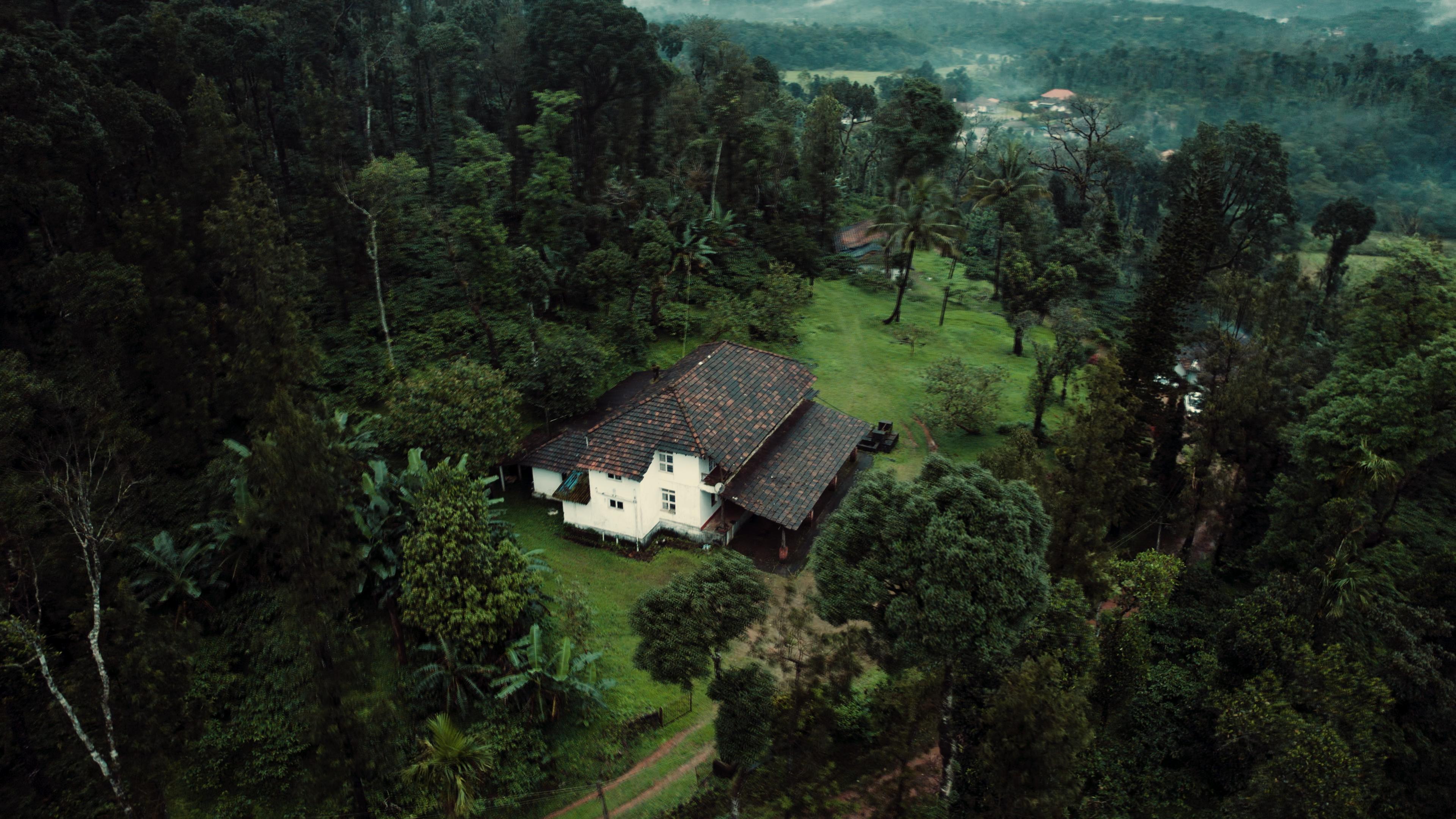
The on-estate operations team — agronomists, supervisors, and seasonal labour.
Amyra Farms was built specifically to be a long-tenor operator. The category
attracts a lot of short-arc money — projects that sell, take the upfront, and pass
on operations to a third party. We didn't want to be that.
The operating team at Amyra Farms includes plantation managers with
multi-generational estate experience in the Sakleshpur and Chikmagalur belt, an
agronomy lead trained in shade-grown coffee, a hospitality and brand team that has
built premium properties in the region, and a finance and compliance backbone that
runs the operator entity in India.
The estate itself — what we call Hillsong Estate — is roughly 450
acres across the Sakleshpur–Chikmagalur axis. Some of that acreage is reserved for
the managed-farmland program. Some is for the Hillsong Reserve villa collection.
The rest is forest cover, water bodies, and infrastructure. We farm what we sell.
The same agronomy team works on owner acres and on the estate's own acres — the
same standards apply across the board.
We are deliberately small. There are roughly twelve owner acres in the current
cohort. We will not scale to hundreds of owners because the operating model breaks
at that scale: the personal touch on owner reporting, the genuine integration with
the estate, the quality of the harvest become hard to maintain. If you want to be
one of many investors in a fund — there are good funds. If you want to be one of a
few owners on a specific piece of land — that's what we built.
The brand was founded with the working assumption that India's plantation-investment
category would mature over the next fifteen years, and that the operators who would
still be standing at the end of that arc would be the ones who took agronomy,
transparency, and exit liquidity seriously from day one. We are early enough that
the proof is in the work, not the press cycle. We are okay with that.
Vertical Integration
The only fully vertical operator in the category
No other brand in Indian managed plantation has built the company
structure Amyra Farms has built. Every link in the chain — from a coffee
seedling in our nursery to a packaged tin on an Amazon shelf — sits inside one
operating business. That structure is the moat.
Post-harvest processing — the step most operators outsource. We don't.
What other operators do — and stop doing
The standard managed-farmland model in India ends at the estate. The operator
grows the crop, harvests it, sells the raw produce to a wholesaler, and the chain
ends there. The owner gets a yield report and a cheque. Every link after that —
processing, grading, branding, packaging, distribution, retail — belongs to
somebody else, and the margins go with it. A few operators integrate one step
forward (basic processing, or a small retail shop on the estate). None integrate
the whole chain.
What Amyra Farms has built instead
Amyra Farms is the only operator in the Indian managed-plantation category
with end-to-end vertical integration. We grow the coffee. We process it
in our own facility. We brand and package it under our own labels. We distribute
it through our own retail front, through 100+ distributors across
India, and into 50+ international markets. You can buy
Amyra Farms products on Amazon today. You can buy them through our website. They
appear in specialty stores. They appear in cafés that source single-estate beans.
That is one company doing what eight different companies usually do.
100+
Distributors across India
50+
International markets shipped
End-to-end
Estate · Process · Brand · Retail
The math advantage of this structure is hidden but real. Because we grow what we
sell, our raw-material cost is the lowest in the category — we don't pay the
middleman premium on green coffee, we don't get squeezed by a wholesaler, and the
margin that other players give away to the supply chain stays inside the operation.
That's the same margin that funds our agronomy investments and that improves the
stability of returns paid out to acre owners.
For the managed-farmland owner, the practical implication is direct: your acre is
plugged into a known buyer (us) at known pricing (transparent and contracted), and
the supply chain that buys your harvest is not an external risk — it is the same
business that sells at retail. That changes the risk profile entirely. We are not
"growing coffee and hoping the export market is good this year." We are both the
producer and the retailer. The two halves of the business stabilise each
other.
The cheapest raw-material cost in the category is not a marketing claim — it is a
structural consequence of being the only operator in the space that owns the entire
chain from estate to retail shelf.
The Roadmap
The 20-year roadmap — coffee, pepper, AI, and 20,000 acres
Investments like this make sense only if the operator is in the business for the
long arc. Here's what we're building toward, and why the next twenty years matter
more than the next two.
The clearest signal that an operator is serious is whether they have a plan for the
next twenty years, not the next two. Here is ours.
Crops · coffee and pepper
We are concentrating deliberately on two crops: coffee and pepper.
Both are long-arc, perennial crops with deep export markets, strong specialty
pricing power, and growing global demand. Both grow well in the Western Ghats
microclimate — pepper is in fact often grown as an intercrop on the same acre as
coffee, climbing the shade trees that line the rows. Both have category-leadership
opportunities for an operator who scales without losing quality. We are not
diversifying into new crops every year. Focus is the strategy.
Acreage · 20,000+ acres by year 20
We are planning to grow the working estate to 20,000 acres or more over
the next twenty years — roughly a 40× expansion of our current footprint.
The growth will be in the Sakleshpur–Chikmagalur–Coorg belt where we already
operate, with selective additions in adjacent regions where the climate and the
supply chain fit. We will scale where we can maintain the operating standards we
sell on. We will not scale otherwise.
20,000+
Acres planned · 20 yr horizon
2
Crops · coffee & pepper
AI · Robotics
Precision agronomy + selective harvest
Technology · AI and robotics
We are investing in AI-driven agronomy — predictive pest
detection from canopy imagery, optimal harvest-window forecasting from
microclimate sensor data, precision irrigation that responds to soil-moisture
telemetry rather than a calendar. We are also investing in robotics for
selective harvest, which is the hardest cost in coffee operations to
control: manual cherry picking accounts for a meaningful share of total estate
expenditure, and the productivity gap between human and machine selective harvest
in coffee is one of the most active areas in agri-tech.
Why this matters for an owner today
Two reasons. First, the operator you partnered with at year one is
going to be a substantially bigger and more sophisticated business by year ten —
that is good for the liquidity of your acre, for brand value when you exit, and for
the consistency of your statements over the long arc. Second, the
technology investments we make at the company level benefit your specific acre
directly. Better data on your harvest. Higher yields from precision agronomy. Lower
picking costs from robotics. The compounding works in your favour.
This is not a sell-the-cohort-and-move-on operation. We are building infrastructure
to compound the same operator advantage for two decades.
Alignment
The 70:30 model, the maintenance line, and how we average returns
An honest, top-to-bottom answer to the question every careful buyer should ask:
who gets paid what, when, and why is it structured this way.
Operator alignment is the single most important diligence question in any
managed-investment category. If the operator is paid before the owner is, the
operator wins when the owner loses. The Amyra Farms model is built around the
opposite incentive — and the structure breaks into three pieces: the revenue
share, the maintenance line, and the pooled-return mechanism. Each one exists for
a specific reason. Here is each in plain terms.
The 70:30 revenue split
When your acre produces a harvest, the sale proceeds flow into an estate-level
account. Agronomy and operations costs (labour, inputs, processing,
transport, taxes) are paid first. The remainder is the net revenue.
That net revenue is split 70:30 — 70% to the owner, 30% to Amyra Farms as
the operator. The owner share is paid out annually after the harvest is
sold and the books close.
What this means in practice: if your acre has a thin year — bad monsoon, lower
coffee pricing, a pest issue — our operating revenue is thin too. We are paid out
of the same pool as you. There is no monthly retainer, no fixed fee on top of the
split, no "performance bonus" structure that lets us walk away with a return while
you absorb the downside. The 30% is our incentive to run the estate well; if we
don't, the 70% you receive will tell you immediately.
Why we charge a maintenance fee — and why it sits outside the split
The 70:30 share is paid at year-end, after the harvest sells. The estate,
however, operates year-round. Agronomy is a continuous activity — pruning,
shade management, pest monitoring, irrigation, soil work — that doesn't stop
because we haven't yet been paid for last year's harvest. Labour, infrastructure
upkeep, utilities, and insurance are monthly costs that need monthly funding. If we
tried to operate the estate by waiting eleven months for our 30% share to arrive,
we would have to cut corners to stay solvent — and the consequence would land in
your 70% the following year, as a lower harvest.
The maintenance fee solves that timing problem. It is a small
per-acre line, disclosed at purchase, that funds the day-to-day operating reality
of the estate. It pays for the things that have to be paid for whether the harvest
is good or bad: the salaries of the supervisors who actually walk your acre, the
inputs that need to be in the ground in February so the crop is healthy in
November, the diesel for the tractors, the insurance on the equipment.
The maintenance fee is not profit. It is the operating capital that lets us run
the estate well across the full year — which is what makes the 70% revenue share
at year-end larger, not smaller. A well-funded operating team produces a better
harvest than a cash-starved one chasing a year-end payout.
Two consequences of this structure are worth naming. First, the maintenance fee is
fully transparent — the per-acre number is on your purchase
documentation and escalates with inflation on a published schedule, not at our
discretion. Second, it allows us to make agronomic decisions on your
timeline as a long-term owner, not on a quarterly cash-flow timeline. That is what
"ownership that compounds" actually requires.
Why returns are averaged across similar plots
Two adjacent acres on the same estate can produce yields that differ by 5–10% in
the same year, for reasons that have nothing to do with the owners — a slightly
different drainage line, a marginal difference in shade canopy density, a pest
event that hit one corner of the estate and not another. If we paid out
strictly per-acre, two owners standing next to each other could end up
with materially different cheques in the same year, despite both owning identical
commitments to the same operator running the same estate.
That isn't fair, and it isn't how plantation cooperatives have ever worked. So
we pool returns across owner acres with similar agronomic conditions — same
elevation band, same shade regime, same planting cohort age — and pay out the
average for that pool. If your acre had a marginally lighter year, the
cohort makes up the difference. If your acre had a marginally heavier year, you
help carry the cohort. Over a 25-year holding period, the smoothing effect
disappears into the noise; what remains is a more honest return number that
reflects the estate's actual performance rather than the lottery of which acre
your name happened to land on.
We publish the underlying production data for your specific acre regardless —
transparency on the input doesn't change because we average the output. You can
see exactly what your acre produced. You can verify the cohort average. You can
ask why your acre over- or under-performed. The averaging is about payout
fairness across the cohort, not about hiding production data from individual
owners.
What the brand and retail business does — and doesn't — touch
The Amyra Farms brand and retail business — coffee sold through 100+ distributors
and 50+ international markets, the Hillsong Reserve villa collection, the estate
experience programmes — is a separate revenue stream, run on the same estate but
accounted for distinctly. That part of the business does not draw from
your acre's harvest pool. The 70% you receive is calculated from your harvest
alone; the retail and brand business is what we earn from the value-add layers
we built on top of the agricultural base.
The model is intentionally boring. No carry structures, no hurdle rates, no
waterfall accounting, no surprises. We earn what you earn on the harvest. The
maintenance line keeps the estate running so what you earn is what it can be.
That's the whole structure.
Tough Questions
The questions owners ask in their first call
The questions we get asked most often in the first 30-minute call with a
prospective owner. The honest answers, not the polished ones.
We have these conversations every week. The questions arrive in roughly the same
order each time.
"What happens if coffee prices crash?"
Specialty coffee pricing has lower beta to the bulk commodity benchmark than most
people assume. Coorg and Sakleshpur estates sell into specialty buyers at premiums
of 25–40% over board-grade. A 30% move in the export benchmark translates to
roughly half that swing in net realisation. We model conservatively using long-run
average pricing, so thin years still leave the owner cash-positive.
"What if Amyra Farms goes out of business?"
The plantation continues to exist. The land continues to belong to the owner. The
agronomic operations are documented and transferable to another operator if needed.
The legal structure separates the land title (yours) from the operating agreement
(Amyra's). Worst case, you appoint another operator. Practical case, this is a
category where operator continuity matters and we are structured to be in business
for the long arc, but the owner is not stranded if we are not.
"Why isn't this priced higher?"
Reasonable question. Sakleshpur plantation land at our entry point is below
comparable Coorg pricing on a per-acre basis. Two reasons: Sakleshpur is earlier on
the tourism-and-real-estate curve, and we are selling the first cohort of a new
operator brand. As both mature, the entry price will move up.
"How do I know the numbers are honest?"
You can request the production data for your specific acre. We do not publish
aggregated yields and call them yours. Annual statements include the underlying
weight, grade, sale value, and counterparty for your harvest. If something doesn't
add up, you can ask, and we will walk through it.
"Should I do this if I can't visit India often?"
Yes, but make sure your structure is right. We work with NRI buyers regularly and
the structuring is well-understood, but it is worth a conversation with a CA
before signing.
Comparison
Comparing Amyra Farms with the alternatives
Honest tradeoffs against the four other ways a buyer might allocate to Indian land
and agriculture. Each has its place.
Managed farmland is a specific tool, not a universal answer. Here is how it stacks
against the realistic alternatives.
Versus other managed-farmland operators
The category in India is roughly five years old and has matured quickly. There are
now several credible operators in coffee, mango, sandalwood, teak, and other
long-arc crops. The differentiators are crop choice, operator track record,
transparency of reporting, and exit liquidity. We are positioned in coffee
specifically because the crop has a 150-year track record in our region and a deep
export market; some operators choose newer crops where pricing is more uncertain.
Versus buying farmland outright and self-managing
The DIY route is genuinely cheaper if you can do it. The hard part is the operating
layer — agronomy expertise, labour management, post-harvest processing, sale
negotiation. For an urban professional with a day job, the time cost of
self-managing typically exceeds the operator share. For a buyer with deep
agricultural background and time to spend, self-managing can absolutely be the
right call.
Versus a REIT or listed real-estate vehicle
REITs offer better liquidity (daily trading) and broader diversification. They do
not offer direct ownership of a specific asset. The two are complementary, not
competing — most of our owners hold REITs too. The distinction matters when you
think about correlation with listed markets and about generational wealth transfer.
Versus urban real estate
Urban land in India has been a strong performer but is increasingly priced as such.
Plantation land in the Western Ghats is still trading at a discount to its rental
productivity. The comparison is not "either-or" — many of our owners hold both,
with farmland as the smaller, longer-duration allocation.
Versus equity (the obvious one)
Equity is liquid, fee-efficient, and historically the highest-return option over
long arcs. Farmland is none of those things. What farmland offers that equity does
not is tangibility (you hold a deed), genuine inflation hedging
(agricultural land tracks real consumer goods inflation more directly than
financial assets), and a different correlation profile. The case for farmland is
allocation diversification, not return chasing.
If after this comparison the right answer is "not now" or "not us," we'd rather you
reach that clearly than commit to something that doesn't fit. The conversation is
worth having either way.
Take the next step
Want to talk this through?
We host private discovery calls with prospective owners — no pitch deck, no pressure,
just a working conversation about whether managed farmland fits the rest of your
allocation. Or read the companion guide for Hillsong Reserve, our private estate
villa collection on the same Sakleshpur land.